

The wrapping mask has taken the skincare world by storm as the latest evolution of the Korean glass skin routine. This innovative treatment creates an occlusive barrier that prevents active ingredients from evaporating, allowing for deep penetration while you sleep. If you are looking for a way to wake up with visibly firmer and more hydrated skin, understanding how to use a wrapping mask is essential for your nighttime regimen.
What is a wrapping mask and how does it work?
A wrapping mask is a specialized skincare treatment designed to form a thin, protective film over the surface of the skin. Unlike traditional wash off masks or sheet masks that are removed after twenty minutes, these formulas are often intended for prolonged wear. The primary mechanism at play is occlusion. By creating a physical seal, the mask locks in the serums and moisturizers applied underneath, ensuring that the skin absorbs the maximum amount of nutrients without moisture loss to the environment.
In the world of K-beauty, this technology is frequently used in night treatments. As you sleep, your skin undergoes a natural repair process. A wrapping mask supports this cycle by maintaining a high level of hydration and preventing the transepidermal water loss that typically occurs in climate controlled bedrooms. The result is a complexion that looks plump, dewy, and refreshed by morning.

The science behind occlusive skincare technology
To understand why a wrapping mask is so effective, it is helpful to look at the concept of the skin barrier. The stratum corneum, the outermost layer of your skin, acts as a shield against environmental stressors. However, this barrier is not impenetrable. Water constantly evaporates from the skin, a process known as transepidermal water loss or TEWL. Research published in the National Center for Biotechnology Information highlights how occlusive agents can improve skin hydration by creating a hydrophobic layer that mimics the skin's natural lipids.
Modern wrapping masks utilize advanced polymers and film forming agents that are breathable yet highly effective at trapping moisture. This is particularly beneficial for ingredients like collagen and hyaluronic acid, which are humectants that thrive in high moisture environments. When these ingredients are "wrapped" against the skin, they can hydrate the deeper layers of the epidermis more effectively than a standard cream alone. This technique is a cornerstone of the Achieving Glass Skin philosophy, which prioritizes long lasting hydration and a smooth skin texture.
Primary benefits of using a wrapping mask
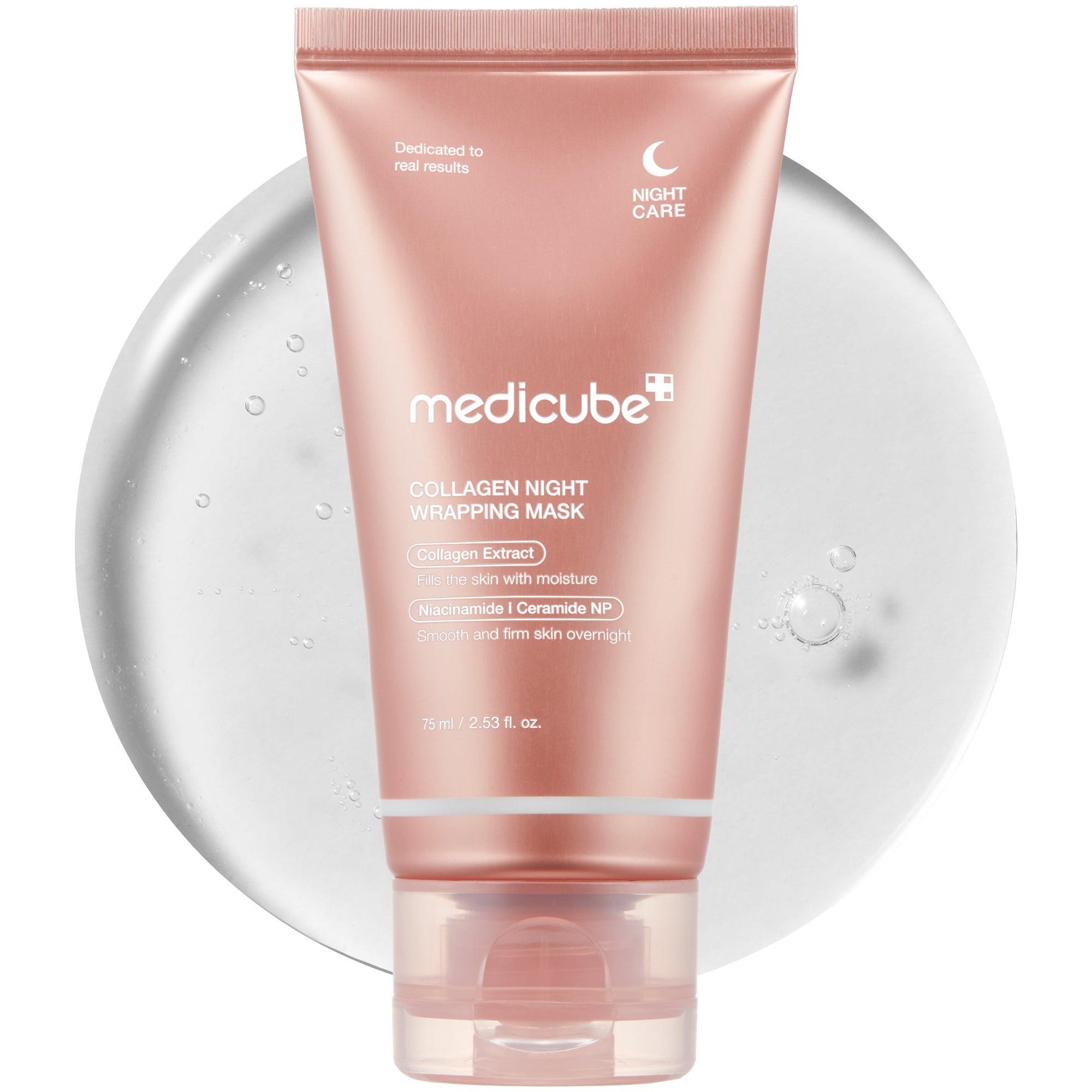
The main advantage of using a wrapping mask is the intensive hydration it provides. Because the mask remains on the skin for several hours, it offers a level of moisture replenishment that most daily moisturizers cannot match. This makes it an excellent choice for individuals dealing with seasonal dryness or those who work in air conditioned offices. Clinical data from products like the Medicube Collagen Night Wrapping Mask shows significant improvements in skin elasticity and moisture retention after just two weeks of consistent use.
Beyond hydration, these masks are powerful tools for improving skin firmness. Many formulas are infused with low molecular weight collagen and elastin, which help to support the skin's structural integrity. The gentle tightening effect of the mask as it dries also provides an immediate lifting appearance, making it a popular choice for Special Occasion Prep. Regular use can help reduce the appearance of fine lines and sleep creases that often form when your face is pressed against a pillow.
Key ingredients to look for in wrapping masks
When selecting a mask, the ingredient profile is just as important as the delivery system. High quality formulas often feature a blend of proteins, humectants, and barrier repairing lipids. These ingredients work in synergy to restore the skin while the film protects the surface. Look for the following components in your next purchase.
- Hydrolyzed Collagen: This form of collagen is broken down into smaller molecules, allowing for better absorption to improve skin bounce and elasticity.
- Adenosine: Known for its anti wrinkle properties, adenosine helps to energize the skin surface and promote a smoother complexion.
- Ceramide NP: These essential lipids are crucial for maintaining a healthy skin barrier and locking in hydration over the long term.
- Hyaluronic Acid: A powerful humectant that can hold up to one thousand times its weight in water, providing deep hydration.
The LOOPS High Tech Wrapping Serum Mask, for example, utilizes a blend of Adenosine and Hydrolyzed Elastin to visibly lift and firm the skin while reducing the appearance of large pores. This type of formulation is ideal for those following an Anti Aging K Beauty Night Solution.

How to apply a wrapping mask properly
To get the most out of your wrapping mask, the application process must be precise. Because these masks are designed to be occlusive, they should always be the very last step in your nighttime routine. Applying them too early can prevent your other skincare products from being absorbed properly. Follow this sequence for the best results.
- Double cleanse your skin to remove all traces of makeup, oil, and sunscreen.
- Apply a hydrating toner or essence to prep the skin and balance its pH levels.
- Apply your favorite serums, particularly those focused on anti aging or brightening.
- Follow with a lightweight moisturizer if your skin is particularly dry.
- Spread an even layer of the wrapping mask over your entire face, avoiding the immediate eye and mouth areas.
- Allow the mask to dry completely, which usually takes fifteen to twenty minutes, before going to bed.
Many users find that these masks are exceptionally "pillow safe," meaning they will not rub off on your linens. In the morning, most wrapping masks can be gently peeled off or rinsed away with lukewarm water, revealing a luminous glow. This method is a staple in many Relaxing Evening Rituals.
What does a wrapping mask do for pore care?
One of the most frequent questions regarding this trend is whether these masks can actually help with pore size and blackheads. While a mask cannot physically shrink your pores, it can certainly improve their appearance. Large pores often look more prominent when the skin is dehydrated or lacks elasticity. By drenching the skin in moisture and firming the surrounding tissue, a wrapping mask helps the skin appear smoother and more refined.
Furthermore, the gentle peel off action of some wrapping masks can help remove superficial debris and dead skin cells that clog pores. If you struggle with congestion in the T zone, incorporating a mask with pore refining ingredients can be highly effective. You can explore more targeted options in our Pore Minimizing & Refining Solutions collection.
Differences between wrapping masks and traditional sheet masks
While sheet masks are excellent for a quick burst of hydration, they have a major limitation: they eventually dry out. Once a sheet mask begins to lose moisture, it can actually start to pull hydration back out of your skin. A wrapping mask solves this problem by using a liquid to film technology that stays occlusive for the entire duration of your sleep cycle. This allows for eight hours of continuous care rather than the fifteen minutes provided by a standard sheet.
Another key difference is the fit. Sheet masks are often one size fits all, which can leave gaps around the nose or jawline. A liquid wrapping mask conforms perfectly to the unique contours of your face, ensuring every inch of your skin receives the active ingredients. For those who want the ultimate overnight transformation, switching to a wrapping mask is often the logical next step in their skincare journey.
Choosing the right wrapping mask for your skin type
Most wrapping masks are formulated to be safe for all skin types, including sensitive skin. However, you should still pay attention to the specific benefits of different formulas. For those with dry or mature skin, a collagen heavy mask is usually the best choice to help with Mature Skin concerns like sagging or deep lines. If you have oily or combination skin, look for a mask that focuses on serum delivery and pore refinement without being overly greasy.
The Medicube Wrapping Mask is a well rounded option for those new to the trend, offering clinical results for both hydration and elasticity. For a more premium experience, the YURI Collagen Night Wrapping Mask is specifically designed for high performance nighttime repair, helping you achieve that coveted K-pop idol glow by morning.
Addressing common skincare mask concerns
There are often questions regarding the safety of these masks for individuals with certain health conditions. For example, some people ask if a person with COPD should wear a mask. It is important to clarify that in the context of skincare, a wrapping mask is a topical beauty product applied to the skin of the face. It is not a medical device or a face covering that affects breathing. Skincare masks are generally safe for anyone to use, though individuals with respiratory issues should always consult their physician before using any products that might have strong fragrances or aerosols.
Similarly, those with conditions like rosacea should approach all peel off products with caution. While many wrapping masks are dermatologically tested and suitable for sensitive skin, the mechanical action of peeling off a mask can sometimes cause temporary redness. If you have highly reactive skin, it is always a good idea to perform a patch test on a small area of your jawline before a full face application. For more gentle options, consider our Skincare for Sensitive Skin collection.
Long term results and routine consistency
Like any skincare treatment, the best results from a wrapping mask come with consistent use. While you will likely see an immediate improvement in hydration and brightness after just one night, the cumulative effects on skin elasticity and fine lines take time. Most clinical studies suggest that using a collagen wrapping mask two to three times per week for a period of at least fourteen days is necessary to see measurable changes in skin firmness.
Integrating this trend into your lifestyle can be a simple way to upgrade your results without adding significant time to your routine. By letting the mask do the work while you sleep, you are essentially giving yourself a professional facial every night. Whether you are prepping for a wedding or just want to maintain a youthful complexion, the Overnight Skin Renewal provided by these masks is unmatched in the world of modern K-beauty.